
Pest control for warehouses and facilities
The perimeter, the dock and the pallet line, with the documentation an audit asks for.
- Stations mapped
- so an auditor can walk the plan
- A fixed cycle
- dock seals to perimeter, every visit
- The history kept
- because the trend is what is audited
Where it starts
A big building with a lot of edges
A warehouse is a large building with a lot of edges and a door that opens all day. The loss here is not a call-out fee, it is stock: contaminated product is not salvageable and in a dry store or a distribution centre it is counted in pallets rather than boxes.
| Where it fails | Why it fails there | What the program does about it |
|---|---|---|
| Dock doors and their seals | A worn seal is a permanent open door at ground level, and the dock is where everything arrives, including what is already living in the load. | Seals checked every visit and a worn one flagged in that night's report, before it is a finding at the audit. |
| Pallet lines and stored product | Stock that does not rotate is harbourage with a roof. The aisle looks clean and the middle of the block has been occupied for months. | Stations along the lines, logged by number per visit, so the middle of a block is monitored without moving it. |
| The building perimeter | A long exterior with vegetation against it, and rodents work the edge. Most of the work on a facility this size happens outside the building. | An exterior bait line walked on the same cycle as the inside, with vegetation and ground gaps noted in the report. |
You answer to an auditor and to your customers
A third-party audit and most retail supply agreements ask for a documented pest management programme, not an invoice for a call-out. What they are checking is the trend over a year and whether somebody acted on it.
Some of the accounts we run
Restaurants, grocery, property management and condo boards across the city, on the same documented schedule.










The visit
What a facility visit is built around
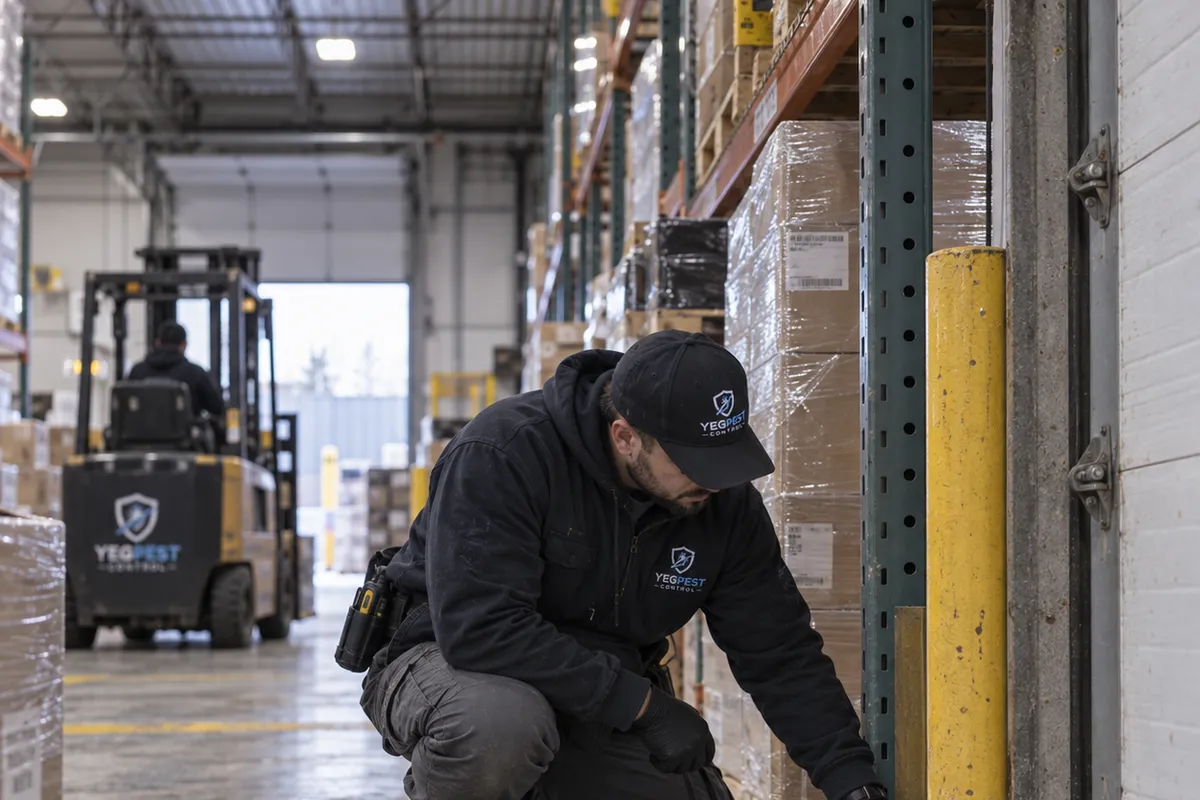
- A fixed cycle, with the stations mapped so an auditor can follow the plan
- Dock seals, the perimeter and the stored product every visit
- Activity logged per station, so a trend is visible before it is an incident
- The report filed the same day and kept, because the history is the thing being audited




Not your building?
The method is the same everywhere. What changes is where we look first and who the record is for.
Restaurants and kitchens
Out of hours, documented, and built around the places a kitchen actually fails rather than the places a visitor sees.
Pest control hereWhat facilities ask
Yes. Stations are mapped and numbered so an auditor can walk the plan, activity is logged per station per visit, and the file is kept per site, because what an audit reads is the trend over the year and whether somebody acted on it, not any single visit.
Most of the work on a facility this size is outside. An exterior bait line runs the perimeter on the same cycle as the interior stations, vegetation against the wall gets flagged, and the dock seals are checked, because a worn seal is a permanent open door at ground level.
Contaminated product is not salvageable, and in a dry store or a distribution centre it is counted in pallets rather than boxes. A rejected load also travels, because it is your customer's auditor who reads the paperwork next. The program exists to make the trend visible before it is an incident.
Anything not here, call 825-522-1997 and describe it. Most of the time we can tell you what it is on the phone.