
Commercial pest control in Edmonton
Documented visits, service outside opening hours, and one crew who learn the site. What an inspector wants to see is a record, not a promise.
Some of the accounts we run










The exposure
What a pest problem actually costs a business
It is almost never the treatment. It is the day you lose, the stock you throw out, and the one review that stays up.
 A failed inspectionActivity in a food premises is a violation whether or not anything was served. Your record of dealing with it separates a note from a closure.How infestations become violations →
 A day you cannot tradeClosing to treat costs more than the treatment, every time, and it lands on the day you can least afford it rather than on a scheduled one.Keeping the doors open →
 Product you have to write offContaminated stock is not salvageable and it is rarely one box. In a dry store or a warehouse the loss is counted in pallets.Contamination and the food chain →
 The review nobody deletesOne photograph from one customer outlives the infestation by years, and it is the first thing the next customer reads.Why businesses stop waiting →
After you say yes
How an account runs
Priced as a program after the survey rather than per visit, so the figure is settled before anything is installed. The fifth stage is the one you are buying. Everything before it is setup.
Survey
A walk of the whole premises, inside and out, including the parts nobody shows a visitor: the dock, the drains, the dry store, the roof line.
The plan
What gets treated, what gets monitored, where the stations go and how often we come. You see it and agree it before a single station is placed.
Install and treat
Stations placed and mapped, the active problem treated, and the entry points that caused it identified and closed.
Scheduled visits
Out of hours, on a fixed cycle. Stations inspected, activity logged, changes to the building noted, and the report filed the same day.
Escalation
Activity between visits gets a response, not a note in the next report. That is what the log is for: it shows a trend before it becomes an incident.
The record
The part that matters at an inspection
An inspector does not want to be told. They want to be handed something, and what they are looking for is not a clean building on the day, it is evidence that somebody has been managing it all year.
- Stations checked
- 12 of 12
- Activity found
- Two stations, back of house
- Action taken
- Rebaited, dock door seal flagged
- Owner to action
- Replace brush seal, bay 2
- Next visit
- Scheduled, out of hours
Filed the same night, kept per site, yours on request.
Six kinds of building
Where we work
Different premises fail inspections for different reasons, and the visit is built around which one you are.
 Restaurants and kitchensFood service and hospitalityWhere we look first →
 OfficesWorkplaces and shared floorsWhere we look first →
 Warehouses and manufacturingStorage, production and distributionWhere we look first →
 Condos and apartmentsMulti-unit buildingsWhere we look first →
 RetailStorefronts and back of houseWhere we look first →
 Hospitality and healthcareHotels, care and clinical settingsWhere we look first →
Discretion and timing
Out of hours, and out of sight
Scheduled around your trading hours and placed where nobody but you knows it is running.
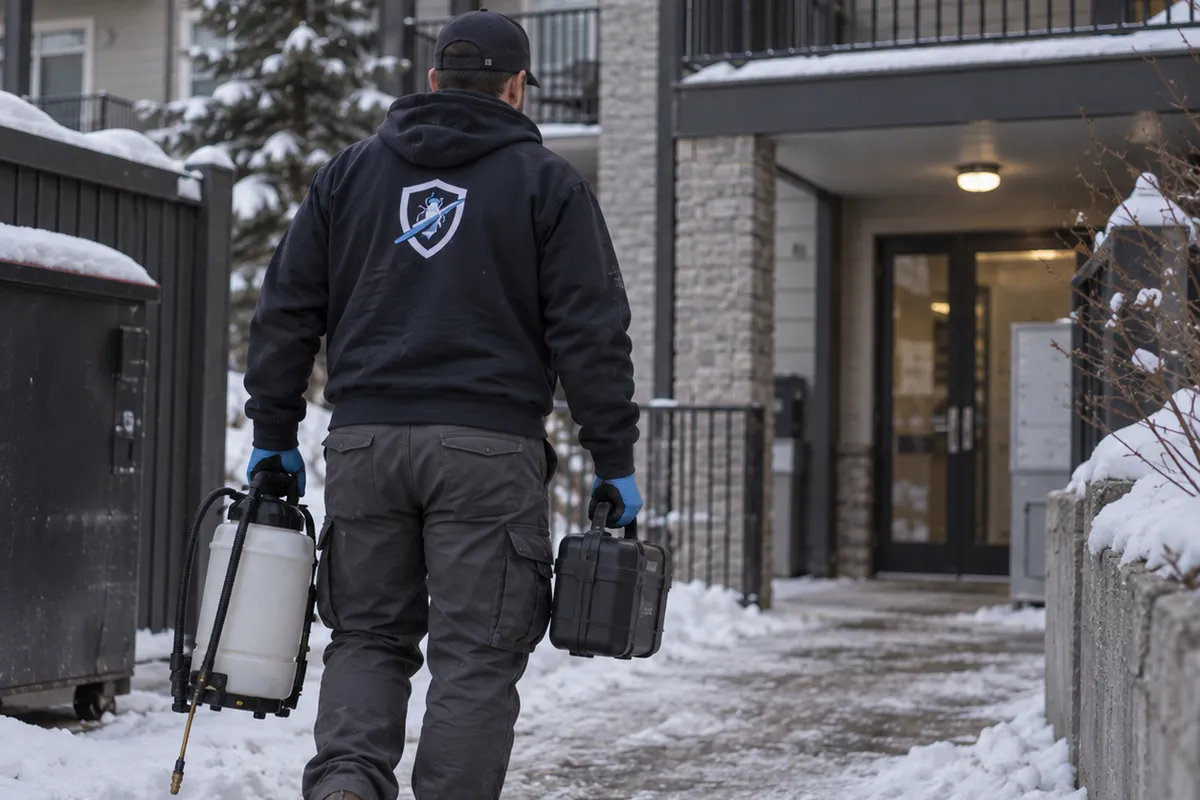
- Access agreed once, at setupKeys, a code, or a named person who lets us in. It is settled when the account starts, so a visit outside trading hours never needs somebody to stay late for it.
- Nothing announces itselfNo branding on display, no conversation in front of a customer, and no van at the front kerb in the middle of trade. For hospitality and retail that is the brief rather than a courtesy.
- Equipment stays out of sightStations sit where a guest does not go and are mapped by number rather than labelled, so what is in the building between visits is findable by us and invisible to everybody else.
Why businesses hand this over
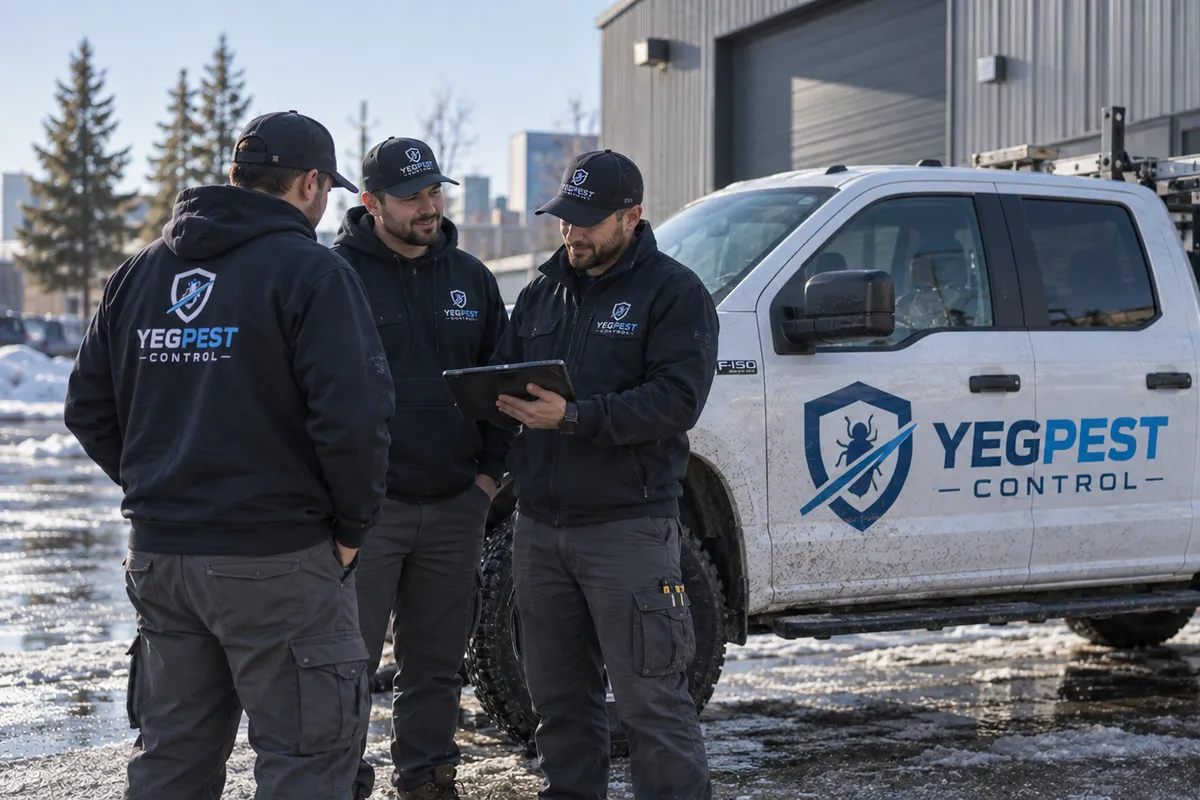
We deal with AHS for you
When Alberta Health Services arrives, the record they want to see already exists, and the person who keeps it is us rather than whoever on your team has time.
- A report built the way you need it
- 24/7 emergency response
- One supplier for all of it
- No job is too small or too big
- Built around your operation
- A plan that can change
What we are usually called about
Every price is where the job starts after a survey, never where it lands on the invoice.
 CockroachesThe one that closes a kitchen. Treated in the voids they live in, not sprayed across a floor.What the visit involves →from $350
 MiceDock doors, dry stores and anywhere stock sits. Entry sealed first, then stations placed and monitored.What the visit involves →from $350
 Fleas and FliesTreated through the life cycle, because the eggs are already laid where the drain is.What the visit involves →from $250
 AntsTraced back to the nest and the exterior line, rather than wiped off the counter.What the visit involves →from $250
 SpidersWebs off the exterior and the perimeter treated, which is a presentation problem before it is a pest one.What the visit involves →from $250
 Bees and WaspsNests at a patio, a bin store or a loading bay, removed before a customer or a member of staff is stung.What the visit involves →from $200
Advice
Written for the people who run the building
Four from the commercial library, all of them practical.
What businesses ask
Yes. Scheduled service outside opening hours is standard on commercial accounts rather than an extra you have to negotiate. For a restaurant that means before service or after close, and for retail it means before the doors open. It is arranged when the account is set up, so it is not something to ask for each visit.
Yes. Every visit is recorded with what was found, what was done and where, and the bait station monitoring is logged visit by visit. That record is what an inspector or an auditor asks to see, and it is what shows a trend rather than a single bad day. It builds as the account runs rather than being assembled when you request it.
For hospitality and retail that is part of the brief rather than a courtesy. Nothing about the visit is visible to a guest or a customer: the work is scheduled outside trading hours and equipment is placed where it is not in a public sightline. The point of a commercial account is that nobody but you knows it is running.
One contact and one crew. A rotating roster means somebody re-learning your building every quarter, which is how a recurring problem in one corner of a kitchen gets treated four times as though it were new each time. Somebody who knows the site notices what changed, and that is most of what a program buys you over a call-out.
Same-day where we can reach you. For a food business the speed of the response is the difference between an incident and a violation, so it is part of the account rather than a new job to quote for. Call and describe what was seen and where, then leave the spot alone: cleaning it up first removes the trail that shows where the activity is getting in, which is the part we need. We will tell you honestly when we can be there.
As a program, after a survey of the premises, rather than per visit. The survey is what sets the figure: the size of the site, what is stored in it, how many ways in there are and what the trading hours allow. You get the number before anything starts, and it covers the scheduled visits rather than being a rate you are billed against.
It gets a response rather than a line in the next report. Somebody comes out, and what was found goes into the log alongside the scheduled visits, which is what shows whether it was a one-off or the start of a trend. A program that only records activity is a filing system rather than pest control.
No. Stations remain the property of YegPest Control and are serviced as part of the program, which is what keeps them monitored and logged rather than sitting unchecked in a corner. What you are paying for is the monitoring and the record of it rather than the hardware.
Anything not here, call 825-522-1997 and describe it. Most of the time we can tell you what it is on the phone.